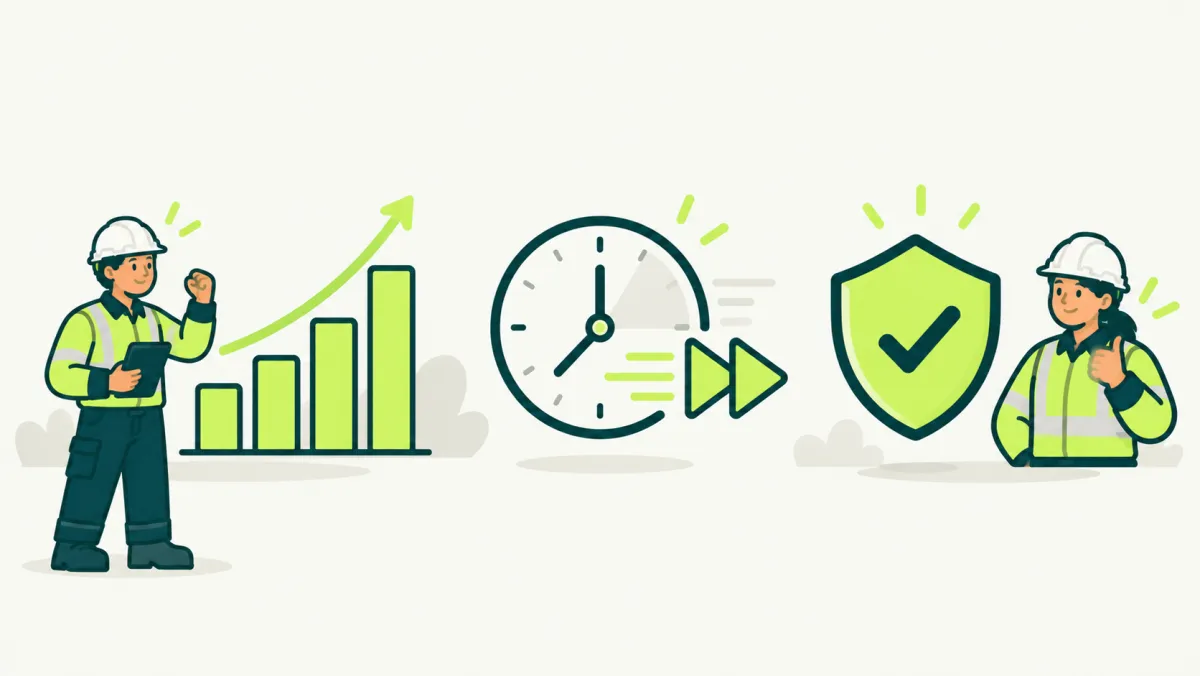
Safety paperwork rarely fails all at once. It erodes — a signed induction here, an expired high-risk license there. By audit day, the holes are obvious to everyone in the room, whs software gathers those loose threads into one governed system, where every entry carries a date, an owner and a trail. What follows looks at how centralization actually works, what it fixes on site, and which questions separate a real platform from a shared drive with ambitions.
Paper Trails Break Under Audit Pressure
Filing cabinets fail quietly. A SWMS sits in a ute, an SDS in a supervisor’s inbox, inductions in a binder nobody has touched since March. Then a regulator asks for the current revision. The team produces three. That moment — not the incident itself — decides most compliance arguments, and it rarely goes the employer’s way.
Where Do Safety Records Scatter Most?
Scatter follows the shape of the work. Mobile crews capture proof on phones. Office staff file it in folders named after people, not projects. Five black holes swallow documentation on almost every site:
- Toolbox talks stay on the foreman’s personal phone
- Contractor insurance lapses because nobody watches expiry dates
- Plant inspections vanish into a long email thread
- Training certificates sit with HR, not safety
- Hazard reports stall in a paper tray
One Register Replaces Fifteen Disconnected Spreadsheets
Centralization does more than tidy. Each worker, asset and site becomes a record with linked history. Open a forklift file, and its servicing, operator licenses and incident log appear together. Strong whs software builds those relationships once, so a single expiry triggers alerts across every crew depending on that plant.
How Does Revision Control Prevent Harm?
Workers act on the document in front of them. Should a risk assessment change after a near miss, the superseded copy keeps circulating on paper. Digital systems retire the old file at publication. Nobody signs a method statement that stopped being correct two quarters ago. Controlling the live revision means controlling behavior on the floor.
Evidence Supervisors Can Produce in Minutes
Audit readiness becomes a by-product, not a quarterly scramble. Entries timestamped at the point of capture assemble themselves into a reporting pack. Inspectors probe four things before anything else:
- Inductions carry a verified signature
- Controls were reviewed last quarter
- Corrective actions closed on schedule
- Inspections happened at stated intervals
The Toolbox Talk Nobody Can Find
That talk sitting on the foreman’s phone is not a filing nuisance. It is proof the training happened — often the only proof that exists. Lose the handset, lose the defense. Centralized documentation changes what a business can argue, not merely how fast it files. Safety records are a legal asset, and assets belong in one ledger.
FAQs
Does centralized documentation replace on-site safety judgment?
No system substitutes for a competent supervisor reading conditions in real time. Centralization removes the excuse of missing information, so judgment rests on current facts rather than half-remembered paperwork.
How long does migrating existing records take?
Most rollouts move critical registers first — licenses, SDS, plant — then backfill historical files over following months. Starting with expiring items delivers value before the archive is complete.
Can smaller contractors justify the cost?
Businesses with ten workers face the same duties as those with a thousand. Fixed obligations and limited admin hours make automated expiry tracking more valuable, not less, for small teams.
What happens to records when a worker leaves?
Retention rules still apply after employment ends, often for years. A centralized register holds that history independent of individual inboxes, phones or departed staff.
Will the system work where there is no mobile signal?
Field tools cache entries on the device and sync once coverage returns. Remote crews still log hazards at the moment of discovery, which is when detail is sharpest.